From the Netherlands to Spain: a laboratory knowledge exchange
WORMVACS2.0 consortium brings together experts in hookworm and schistosome immunology, epidemiology and vaccine development. They each bring their expertise to the project research, continuously collaborating, exchanging knowledge and sharing approaches in their work in developing a vaccine for parasitic worm infections.
In May, another research stay took place between the partners, this time with the PhD candidate Geartsje Bakker from Wageningen University travelling to ISGlobal in Spain. Geartsje’s research focuses on using plant-based systems to produce vaccine antigens with different N-glycosylation patterns, an approach that could significantly impact the immunogenicity of these proteins.
The aim of the visit was for the ISGlobal team to train her to use their Luminex technique and to test her plant-produced Schistosoma mansoni glycoproteins. Together, they tested the samples produced at Wageningen University using the ISGlobal team’s protocols and serum samples, yielding new data.
“These new findings”, emphasises Geartsje, “would not have been possible without this collaboration. I also found it very educational to work in a different lab for some time, giving me new insights into different ways to run and organise a laboratory.”
The visit also included participating in the laboratory meetings, one of which served as an opportunity for Geartsje to present her work to the Barcelona team. This way, the team learned more about plants as a vaccine production platform, while their guest heard more about their everyday work in parasite immunology.
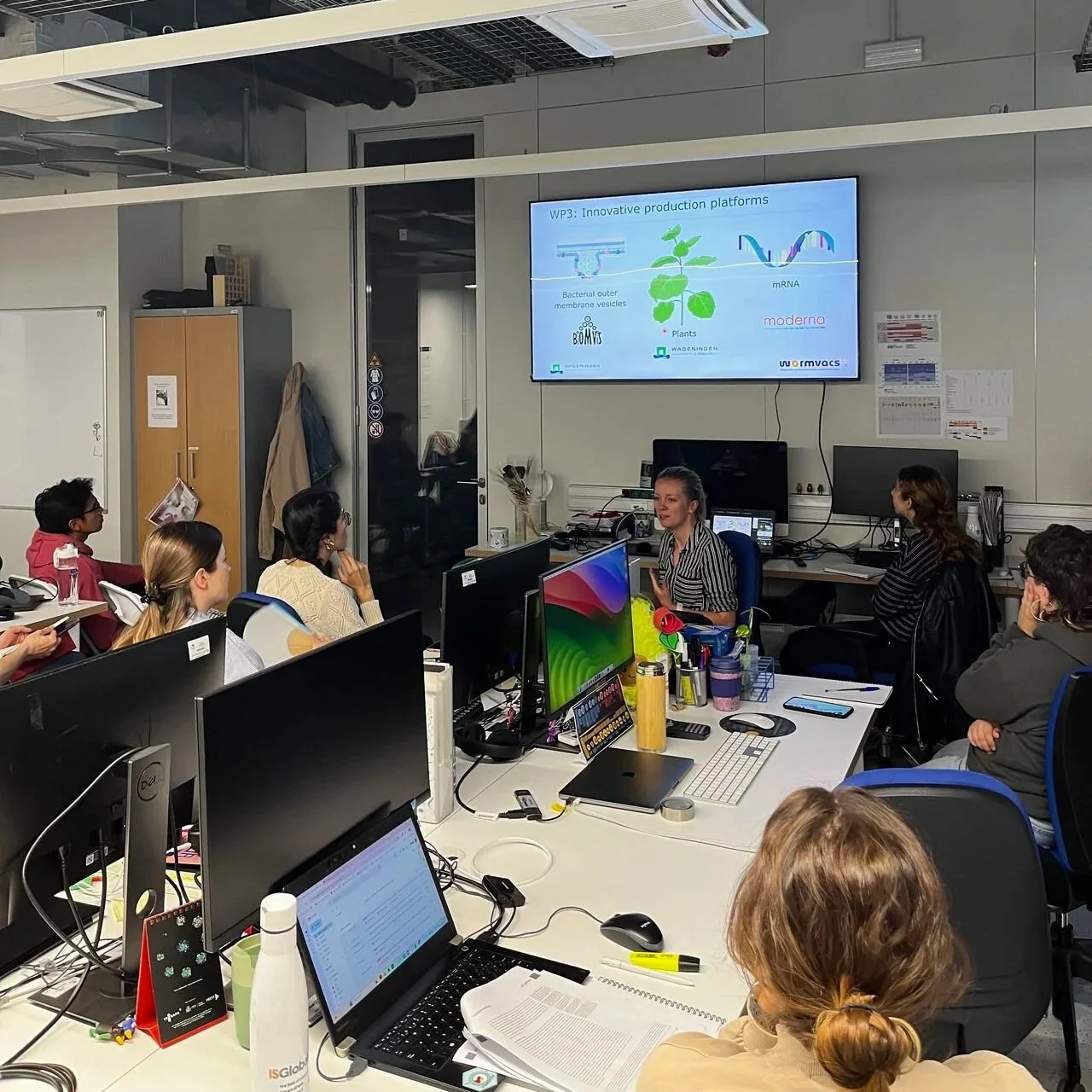
Geartsje Bakker presenting during the meeting at ISGlobal.