
Authors: Inocência Cuamba, Rebeca Santano, Berta Grau-Pujol, Marta Vidal, Anélsio Cossa, Chenjerai Jairoce, Rojelio Mejía, José Muñoz, Ruth Aguilar, Bin Zhan, Augusto Nhabomba, Gemma Moncunill, Carlota Dobaño
Title: Helminth-infected Mozambican children with malaria have increased anaemia, cytokines and helminth-specific antibodies
Doi: 10.1371/journal.pntd.0014485
What is this publication about?
This publication presents the results of a study done among children (2-10 years old) in southern Mozambique. Researchers aimed to assess the impact of malaria coinfection on helminth-related clinical and immune outcomes in children.
They found that children with both infections were more likely to have anaemia than those infected only with worms. Coinfected children also showed higher levels of immune mediators in their blood and stronger antibody responses to worm antigens, compared to children with worm infections alone.
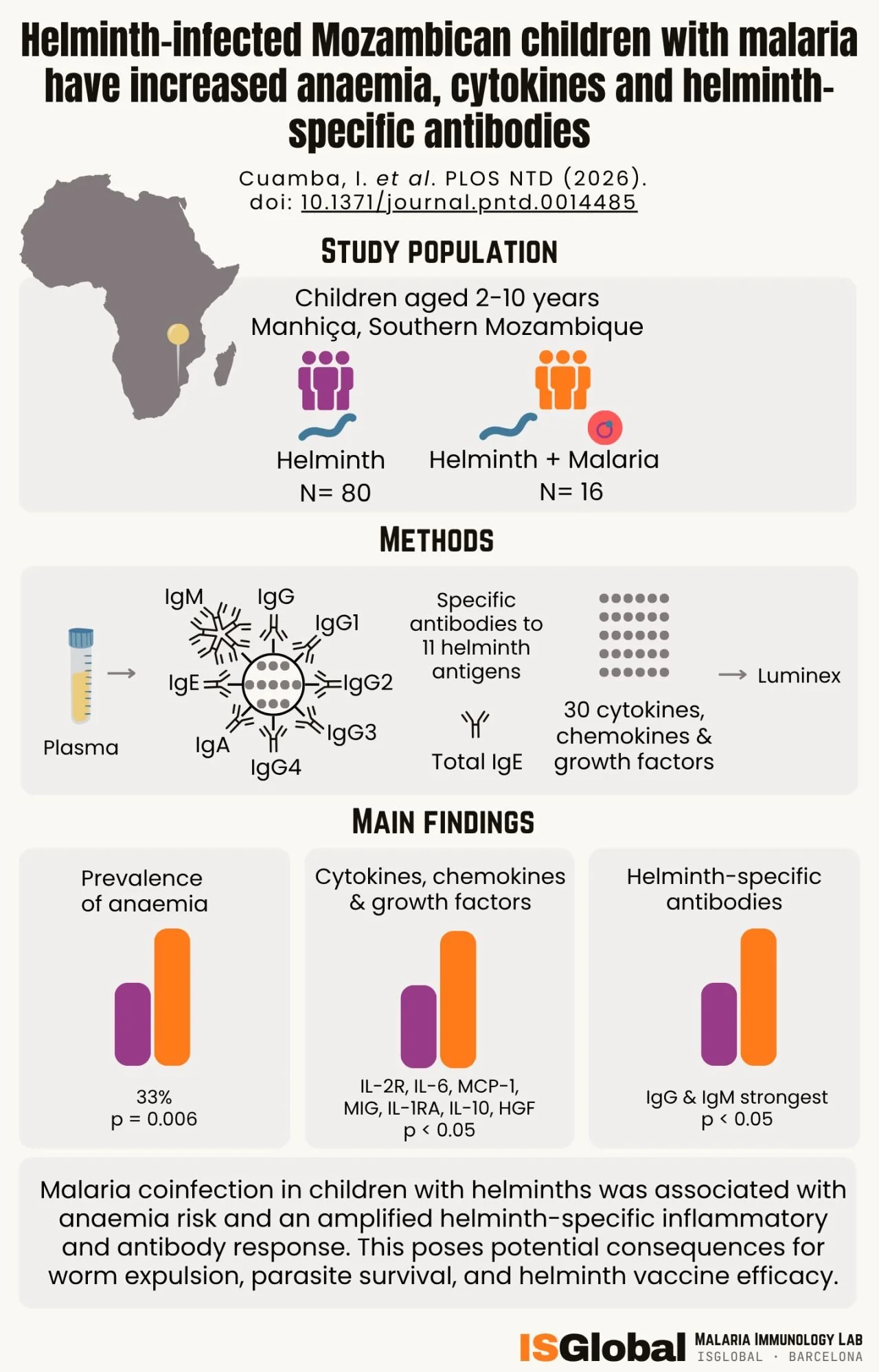
Graphical abstract of the study’s findings by Dr Rebeca Santano.
Why is it important?
Infections such as malaria and parasitic worm infections continue to have profound effects on public health, with effects mainly concentrated in tropical areas. Several studies have highlighted potential interactions between Plasmodium falciparum (the malaria-causing parasite) and parasitic worms in concurrent infections.
Every new piece of research on the effects of coinfection can eventually lead to new or improved preventive and treatment methods, ultimately strengthening global health.
How can this make a difference?
The findings suggest that malaria can alter the immune response to worms and worsen anaemia.
This interaction may affect how worms survive or are cleared by the immune system and could also potentially influence how individuals respond to future vaccines against neglected tropical diseases, including parasitic worm infections.